
A new perspective on cellular communication and immune science.
Neo Claris Exploring the Science of NK Cell-Derived Exosomes
Neo Claris is an investigational exosome product derived from the NK-92 natural killer cell line. Manufactured by UNUS Biotech, it represents an emerging area of extracellular vesicle research focused on molecular composition, cellular communication, and immune signaling. JJV Bio provides healthcare professionals access to manufacturer information, scientific literature, and educational resources to explore this evolving field.
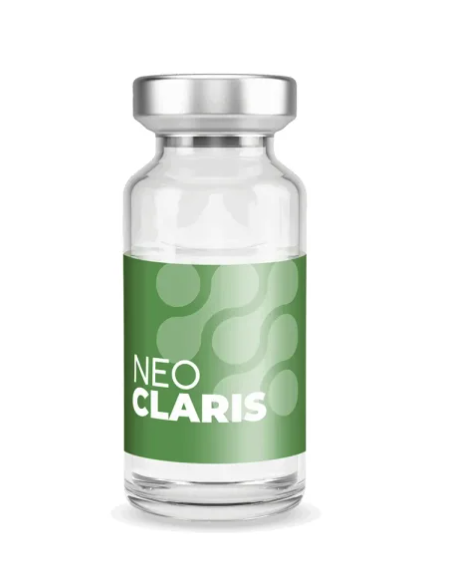
NK-92 Cell-Derived Exosomes · UNUS Biotech
A New Perspective on Cellular Communication and Immune Science
Neo Claris is presented by JJV Bio as an investigational product for professional education — an emerging area of extracellular vesicle research focused on molecular composition, cellular communication, and immune signaling.
The Source
The NK-92 Cell Line: A Foundation in Immune Research
Natural killer (NK) cells are components of the innate immune system, recognized for their ability to respond to abnormal and stressed cells. The NK-92 cell line was established in 1992 at the British Columbia Cancer Agency and has become a widely studied model in natural killer cell research. Unlike primary NK cells, which can be challenging to isolate and expand consistently, NK-92 cells provide a continuously growing, characterized laboratory cell line for scientific investigation.
Neo Claris is described by its manufacturer as an exosome product derived from this cell line. The resulting extracellular vesicles are distinct from the living parent cells.
Molecular Cargo
Inside NK Cell-Derived Exosomes
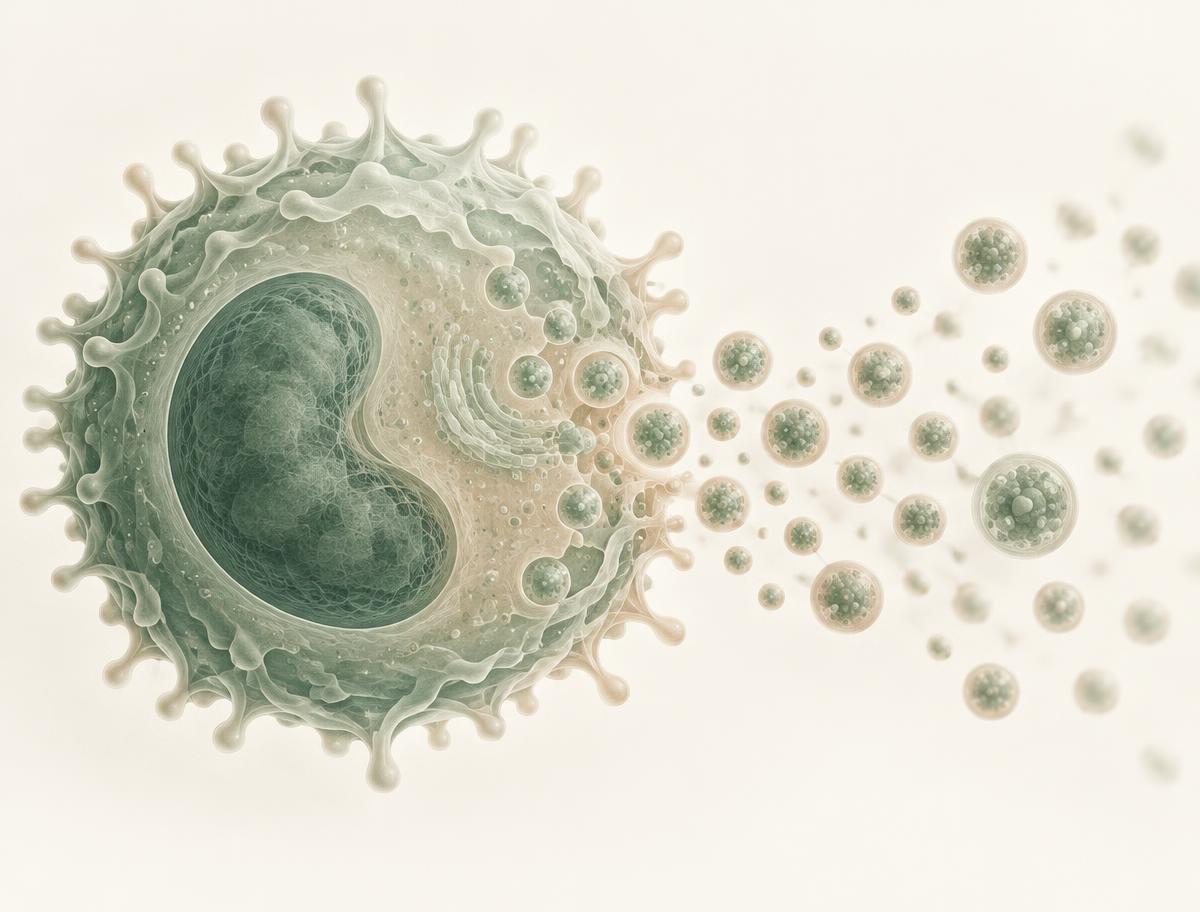
NK cell-derived extracellular vesicles are studied for their molecular cargo, including proteins, lipids, and regulatory RNA associated with cellular communication. Published literature describes exosome populations in the approximate 30–150 nm range and commonly examines markers such as CD63, CD81, and ALIX.
Cytotoxic proteins
Perforin · granzymes A, B and H · granulysin
Death receptor ligands
FasL · TRAIL
Adhesion-associated molecules
CD226 (DNAM-1)
Cytokines
TNF-alpha
Regulatory RNAs
let-7b-5p · miR-124 · miR-10b-5p · miR-92a-3p
Exosome-Associated Markers
CD63 · CD81 · ALIX
Common markers evaluated in extracellular vesicle characterization.
These are research-reported molecules, not a verified ingredient or potency specification for Neo Claris. Product-specific characterization requires supporting analytical data.
Immune Signaling
Exploring the Language of Immune Signaling
- 01
Molecular cargo transfer
Vesicle uptake by recipient cells and delivery of proteins and regulatory RNA.
- 02
Immune-cell communication
Interactions studied in T-cell signaling and antigen-presenting cells.
- 03
Cellular response pathways
Preclinical research on perforin, granzymes, FasL and TRAIL.
Preclinical research examines how NK extracellular vesicle-associated microRNAs interact with T cells and immune signaling pathways. These observations come from specific experimental systems and do not establish the same effects for Neo Claris.
See Dosil et al., eLife 2022, in Selected Scientific Literature below.
Research Directions
Current Areas of Scientific Exploration
Research in this field is largely preclinical.
Immune Signaling
Cell-to-cell communication and regulatory pathways.
Cellular Stress
NK-cell biology and responses to stressed cells.
Senescence Research
Investigations into immune surveillance and senescence-associated mechanisms.
Molecular Biology
Vesicle cargo, uptake, characterization and signaling.
Process
From NK-92 Cell Culture to Extracellular Vesicle Research
According to manufacturer materials, exosomes are collected from NK-92 cell-culture supernatant and undergo isolation and purification processes involving filtration and centrifugation. Available documentation includes a Neo Claris Certificate of Analysis for lot 100125.
- 01
NK-92 source
Characterized parent cell line.
- 02
Vesicle isolation
Manufacturer-described processing.
- 03
Documentation
Product and lot-specific analysis.
Configurations
Product Configurations
The manufacturer describes Neo Claris in the following configurations.
50 Billion Exosomes
1 cc (1 mL)
100 Billion Exosomes
2 cc (2 mL)
Manufacturer-reported configurations. Particle counts have not been independently verified by JJV Bio and are not clinical dosing information.
Selected Scientific Literature
Selected Scientific Literature
The following peer-reviewed publications describe general preclinical research on NK cell-derived extracellular vesicles. They are not studies of Neo Claris and do not constitute product-specific data.
The following publications discuss NK cell-derived extracellular vesicles and related research. They are provided for scientific education and do not constitute clinical evidence for Neo Claris.
- Wu F, Xie M, Hun M, et al. Natural Killer Cell-Derived Extracellular Vesicles: Novel Players in Cancer Immunotherapy Frontiers in Immunology. 2021;12:658698.
- Zhu L, Kalimuthu S, Gangadaran P, et al. Exosomes Derived From Natural Killer Cells Exert Therapeutic Effect in Melanoma Theranostics. 2017;7(10):2732–2745.
- Dosil SG, Lopez-Cobo S, Rodriguez-Galan A, et al. Natural killer (NK) cell-derived extracellular-vesicle shuttled microRNAs control T cell responses eLife. 2022;11:e76319.
FAQ
Frequently asked questions
What is Neo Claris?
Neo Claris is a manufacturer-described exosome product derived from the NK-92 natural killer cell line. It is manufactured by UNUS Biotech and is presented by JJV Bio for healthcare professional education.
What makes the NK-92 cell line unique?
Established in 1992, NK-92 is a continuously growing human natural killer cell line extensively studied in immune-cell research. Its established laboratory characteristics make it useful for scientific investigation.
How do NK-derived exosomes differ from MSC-derived exosomes?
They originate from different cell types and may exhibit different molecular signatures. NK-derived vesicles are studied for immune-related signaling, whereas MSC-derived vesicles are investigated across a different range of cellular communication pathways.
What molecules are associated with NK-derived exosomes?
Published studies describe perforin, granzymes, regulatory RNAs and other signaling-associated molecules. Their presence and concentrations in Neo Claris require product-specific analytical confirmation.
Do Neo Claris exosomes contain living NK cells?
Exosomes are extracellular vesicles rather than living cells. They do not divide or proliferate like viable NK cells. Product-specific testing is necessary to substantiate the composition of the finished preparation.
What is the connection between NK exosomes and immune communication?
Preclinical studies investigate how NK-derived extracellular vesicles interact with immune cells, transfer molecular cargo, and influence signaling pathways. These observations do not establish clinical effects for Neo Claris.
What research is available regarding NK exosomes and cellular senescence?
NK-cell involvement in senescent-cell surveillance is an active research area. Studies also investigate NK-derived vesicles and related mechanisms, but there is no established evidence that Neo Claris eliminates senescent cells or improves longevity outcomes.
What quality and testing documentation is available?
Manufacturer materials include a Neo Claris Certificate of Analysis for lot 100125. Specific analytical results should be interpreted from the applicable product and lot documentation rather than inferred from published research on other NK-derived vesicles.
Is Neo Claris FDA-approved or authorized for clinical use?
Neo Claris is not established as FDA-approved or authorized for clinical use. Investigational research involving NK-92 cells does not establish regulatory authorization for NK-92-derived exosome products. Safety and effectiveness for clinical use have not been established.
Explore Neo Claris With JJV Bio
Connect with JJV Bio to learn more about NK-92-derived extracellular vesicle science, manufacturer documentation, and available research.
For Healthcare Professional Education. Neo Claris is an investigational NK-92-derived exosome product. Information is provided for scientific and educational purposes only. Published findings involving NK cells or NK-derived extracellular vesicles do not establish the safety or effectiveness of Neo Claris for any disease or medical condition. No FDA approval or authorization for clinical use is implied.
Regulatory note. Products in this portfolio do not share a single regulatory status, and some are not FDA-approved or cleared. Product-specific regulatory information must be reviewed before any marketing use. Nothing on this site is a claim of safety, efficacy, or suitability for any indication.